עגלת הקניות שלך ריקה כעת!
How to Use the Percent of Sales Method for Bad Debts

That said, one must note that businesses cannot predict fixed using https://test.codifyinstitute.org/what-is-osmi-a-practical-guide-to-managing/ this tool. Keep in mind that it makes sense to use this method only for items that you know are directly related to the Sales value. If you cannot trace this relationship, it makes no sense to make the calculation based on this number.
Mastering Sales Percentages for Success
- This means advertising it online, through social media, and through print publications.
- Now that she has the relevant initial figures, she can move on to the next step.
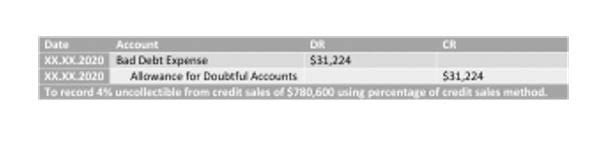
- So, Electronics Inc. would record a bad debt expense of $20,000 on its income statement for the year.
- Especially when it comes to creating a budgeted set of financial statements.
- This can result in a disconnect between the income statement and balance sheet when it comes to the treatment of accounts receivable and bad debts.
- If you want to make financial planning decisions based on your business’s historical performance, then the percentage-of-sales method is your new best friend.
It also contributes to a better match between inventory levels and customer demand, aligning supply and demand more effectively and enhancing overall business performance. This method is widely applied in financial planning and decision-making as it provides a simple and effective way to estimate expenses and evaluate the financial health of a company. It allows businesses to anticipate their financial requirements based on the expected sales volume, enabling them to allocate resources efficiently. The fundamental concept behind the percentage of sales method is that certain financial statement accounts have a proportional relationship with sales, while others do not.
- A good starting point for this would be the total number of units in your warehouse divided by the number of units sold.
- For example, if accounts receivable were historically 10% of sales, this percentage is applied to the projected sales to estimate future accounts receivable.
- This method helps estimate the financial implications of sales growth for high-level planning.
- This method aligns the advertising budget with the company’s sales performance, allowing for flexibility during periods of fluctuating revenue.
- This strategic approach ensures that resources are allocated in a manner that reflects the company’s overall growth and targets.
- By analyzing previous sales data, businesses can identify patterns and anticipate future sales performance.
How does the percentage of sales method handle fixed costs compared to variable costs when you forecast?

For instance, if sales grow, a company needs more inventory and will have more accounts receivable. Purchases from suppliers will also increase, leading to higher accounts payable. Liz’s final step is to use the percentages she calculated in step 3 to look at the balance forecasts under an assumption of $66,000 in sales. Most businesses think they have a good sense of whether sales are up or down, but how are they gauging accuracy?
Customers
This percentage improvement is significant for your accounts receivable and current sales, providing a clear percentage. We will explore real-life examples of how the percentage of sales method can be applied to calculate advertising budgets, estimate bad debt expenses, and determine inventory levels. By the end of this article, you will have a solid understanding of this essential financial concept and how it can benefit your business’s financial planning and decision-making processes. Understanding how to find percent of sales can be achieved through various methodologies. Some companies prefer the historical method, analyzing past sales data to project future sales percentages. For example, using historical data is valuable for businesses with stable markets, whereas predictive tools are beneficial for dynamic environments.
Creating a Budgeted Set of Financial Projections for Future Planning
The percent of sales method assumes certain financial statement accounts, on both the income statement and the balance sheet, fluctuate directly with sales volume. Examples of spontaneous assets include cash, accounts receivable, and inventory, as their levels rise or fall with sales. Spontaneous liabilities include accounts payable and accrued expenses like wages payable and taxes payable, which also adjust with business activity. The percentage of sales method provides businesses with a practical approach to financial forecasting, enabling them to project revenue, expenses, and financial needs based on expected sales growth. While this method is useful for short-term planning and budgeting, businesses should consider its limitations and complement it with other forecasting techniques for greater accuracy. By continuously refining projections and adapting to market conditions, businesses can enhance financial decision-making and achieve long-term stability.
See how AI-powered collaboration helps finance teams align faster and drive clarity, ownership, and action across the business. Start your free trial of Zendesk customer service software today and see the difference accuracy makes. I’ll now zoom in on one detailed case study and go through this whole process in detail. what is the percent of sales method Of these expenses, he sees that only the last two are tied to sales as they fluctuate. If your sales were higher in the same period last year, the economy, and not your sales strategy, may be to blame. You would compare an earlier, lower sales period with a later, higher one.
Calculate forecasted sales.
Then, multiply your chosen percentage by your estimated sales revenue to get your marketing budget. For example, Mental Health Billing if you choose 10% and your sales are projected to be $1 million, your marketing budget will be $100,000. Finally, allocate your marketing budget across different channels, campaigns, and activities based on your marketing strategy and objectives. Tools such as spreadsheets, dashboards, or software can be used to track and manage your marketing spend. The cost of goods sold, inventory, and cash are just a few examples of the financial line items that are calculated as a percentage of sales in the percent of sales method of financial forecasting.
- It’s a quicker method because of its simplicity, so some businesses prefer it to other, more complex techniques.
- The Percentage of Sales Method is a financial analysis technique used to determine the amount of a company’s expenses that are directly related to sales revenue.
- The percentage-of-sales method is used to develop a budgeted set of financial statements.
- Then, you apply this percentage to your projected future sales to forecast your new cost of goods sold.
- This is different from the Aging of Accounts Receivable Method where a journal entry is done to bring the balance in the account to the desired balance.
- Using reliable and consistent historical sales data is absolutely fundamental for achieving accurate future projections.
Net Accounts Receivable: Percentage of Sales Method: Videos & Practice Problems

You can proactively identify potential funding gaps or even unexpected cash surpluses much earlier in the planning cycle. Percentage forecasting provides a remarkably quick and highly effective financial forecast for immediate insights. It operates on the core assumption that many financial accounts naturally grow or shrink directly in proportion to your sales. It greatly simplifies how you can effectively project your future financial needs and outcomes. Management would want to know why baking brownies has become more expensive if the percentage was 25% last year. It might be due to rising flour and egg costs, but it might also be due to a shift in the supply chain.